New REACH Hub project brings green energy, STEM education, and community resilience together
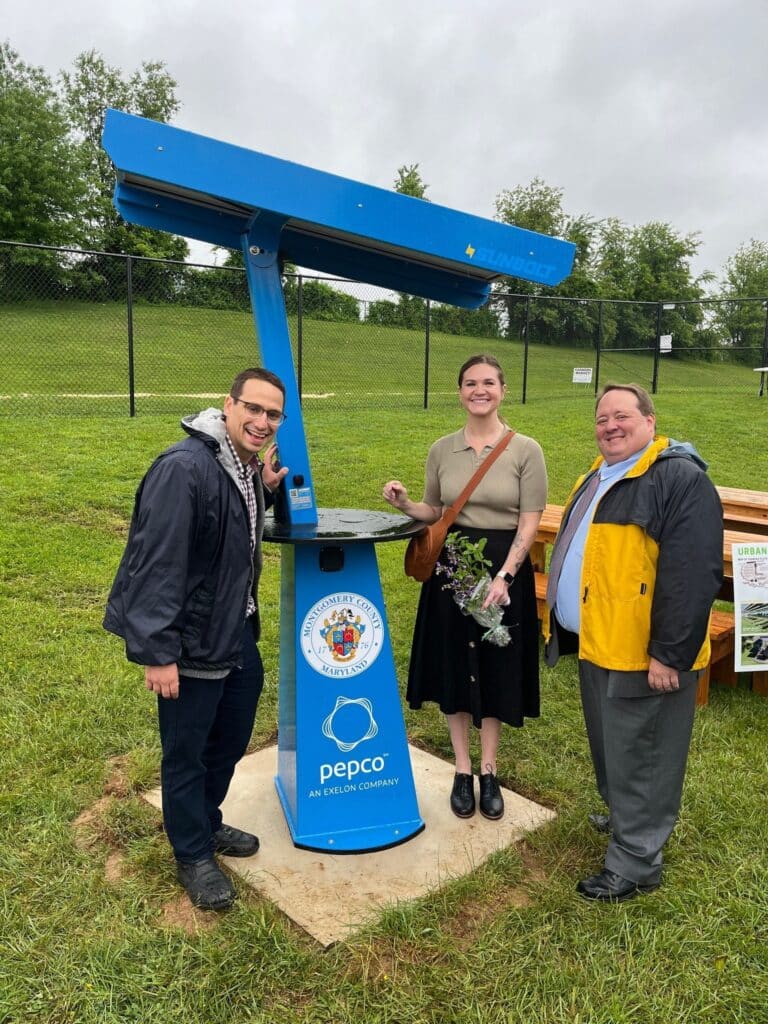
Montgomery County Public Schools (MCPS) is harnessing the power of the sun in a new initiative that blends education, climate action, and community resilience. As part of its REACH Hub (Resiliency Education Action Climate Habitat) project, MCPS has begun installing solar charging stations from Sunbolt, providing students and the community with access to clean, renewable energy.
Located at a centralized site serving 20 nearby schools, the REACH Hub is designed as a living laboratory for sustainability, supporting learning, preparedness, and innovation in the face of climate change.
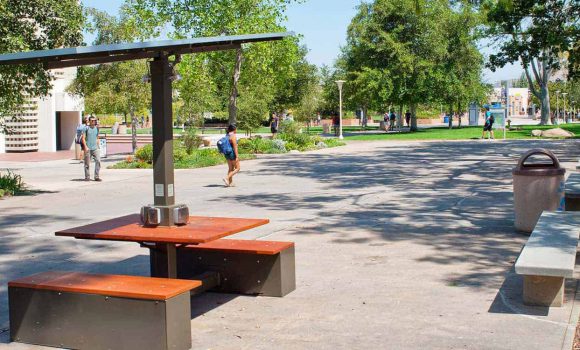
The Sunbolt charging stations, funded through a public-private partnership with PEPCO and Montgomery County, serve multiple roles: powering outdoor classrooms, charging devices, and offering hands-on learning opportunities. With clear-glass designs that reveal internal electrical systems, the stations double as teaching tools for students engaging with STEM and renewable energy concepts.
These installations are part of a larger effort to redefine what a resiliency hub can be. Alongside the solar stations, the REACH Hub features an urban farm operated by the Charles Corner Conservancy, a stormwater management amphitheater, and the upcoming Energy Demonstration Center, which will further enhance climate literacy and real-world learning.
With summer internships in place and a professional development session planned for more than 70 middle school teachers, the initiative is deeply integrated with classroom learning and educator training. But the impact goes beyond school grounds, these solar stations also support the broader community, offering a reliable source of energy during outages or emergencies and showcasing practical ways to build resiliency at home.
“Montgomery County is showing what’s possible when climate action, education, and innovation intersect,” said Vanessa Branco, a representative from Sunbolt. “It’s the kind of story that should inspire communities everywhere.”
A second phase of the project, including the advanced energy center, is expected to be completed in the first half of next year, bringing even more renewable infrastructure and educational opportunities to the county.